Searching U.S. Public Records Responsibly
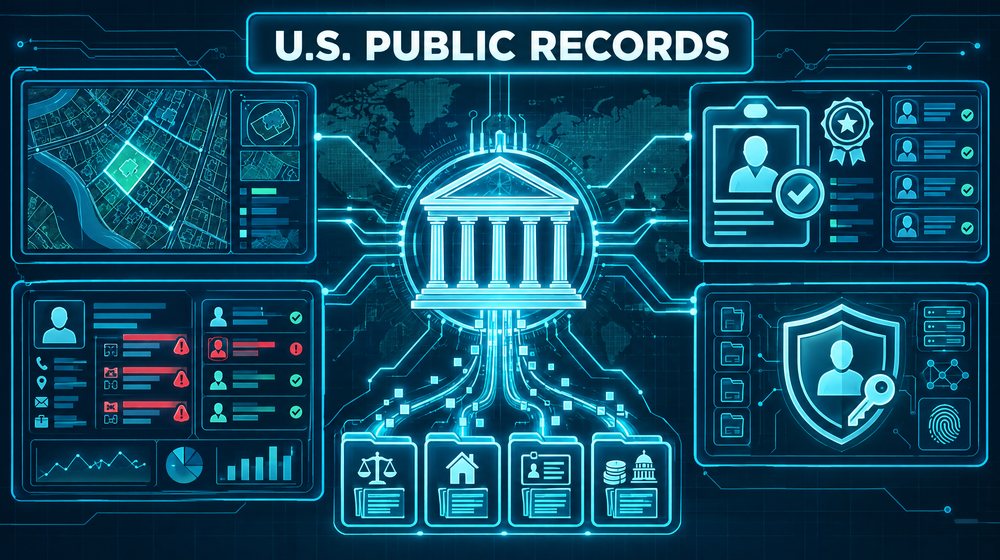
The United States makes a remarkable amount of government information available to the public. Court dockets, property deeds, business filings, professional licences, secured lending notices, and political donations can all be searched, often online and often free. For an OSINT researcher, these records are some of the most reliable sources available, because they are created by official processes and usually carry dates, reference numbers, and legal consequences.
They also have real limits. Records are spread across thousands of federal, state, county, and municipal systems with no single index. Many contain errors. Some are restricted. And the way you use them can bring you under laws such as the Fair Credit Reporting Act. This guide walks through the main record types, how to approach each one, and how to stay on the right side of accuracy and the law.
This article is general information, not legal advice. If your research will support decisions about employment, housing, credit, or insurance, or if you are unsure which rules apply, speak to a lawyer.
Start with jurisdiction
The first question for any US public records search is where the record would have been created. The US has a federal system, 50 states, the District of Columbia, territories, and more than 3,000 counties, many of which keep their own records. A divorce filed in one county will not appear in a neighbouring county's index. A company formed in Delaware will be on Delaware's register, not on the register of the state where it actually operates, although it may also be registered there as a foreign entity.
Before you search, build a short list of relevant jurisdictions from what you already know: places of residence, business addresses, states of incorporation, and locations of property. Search each one deliberately, and record which ones you covered. "No record found" means nothing unless you say where you looked.
Court records
Federal courts and PACER
Federal court records, including civil cases, criminal cases, and bankruptcies, are available through PACER, the Public Access to Court Electronic Records service run by the federal judiciary at pacer.uscourts.gov. The PACER Case Locator lets you search by party name across federal courts.
PACER charges per page for most documents, currently 10 cents per page with a cap of $3 per document for most documents. Fees are waived for any account that accrues $30 or less in a quarter. Court opinions are generally free. Check the PACER site for the current fee schedule before running large searches, because costs add up quickly when you download dockets for common names.
The Free Law Project's CourtListener hosts the RECAP Archive, a collection of federal court documents that PACER users have shared. It is free to search and is a good first stop, though coverage is incomplete.
State and local courts
Most litigation in the US happens in state courts, and access varies widely. Some states run a single statewide portal. Others leave access to individual counties, some of which offer online search and some of which require a visit or a request to the clerk. Criminal, family, juvenile, and probate records often carry extra restrictions.
Practical tips:
- Find the court structure for the state first. Trial courts have different names in different states.
- Search name variations, including middle initials, maiden names, and common misspellings.
- Read the docket, not just the case caption. The caption tells you who the parties were. The docket tells you what happened.
- Confirm identity with more than a name. Court indexes often show limited identifiers, so look for addresses, dates of birth, or other details in the filings themselves.
- Note the outcome. A lawsuit filed is not a judgment. A criminal charge is not a conviction. Many cases are dismissed, settled, or later sealed or expunged.
Property and assessor records
Real property records are usually split between two county offices:
- The assessor (sometimes called the property appraiser) values property for tax purposes. Assessor sites often show the parcel number, owner name, mailing address, assessed value, land use, and building details.
- The recorder (also called the register of deeds, county clerk, or similar) keeps documents that affect title: deeds, mortgages, releases, liens, and easements.
Together they can show who owns a property, when they acquired it, from whom, whether it is mortgaged, and whether liens have been filed against it. Ownership through a trust or an LLC is common and can hide the person behind the property. In those cases, follow the entity into business filings.
Be aware that many states run address confidentiality programmes for survivors of domestic violence and allow certain people, such as judges and law enforcement officers, to shield their home addresses in public records. If you notice that a record has been shielded or redacted, respect it. Do not try to work around the shield through other sources.
Professional licensing boards
Many professions require a state licence, and most licensing boards offer an online lookup. Typical examples include medical, nursing, dental, and pharmacy boards, state bars for lawyers, accountancy boards, real estate commissions, contractor licensing boards, and insurance departments.
A licence lookup can confirm that a person holds the credential they claim, show the licence status and expiry, and sometimes show disciplinary actions. Some national resources help too. FINRA's BrokerCheck covers registered brokers and brokerage firms, and the federal NPPES registry lists National Provider Identifier numbers for healthcare providers.
Remember that licensing is state by state. A professional may hold licences in several states, and discipline in one may not appear in another's records. Check each state where the person practises or has practised.
UCC filings
When a lender takes a security interest in a business's assets, such as equipment, inventory, or receivables, it usually files a UCC-1 financing statement, named after the Uniform Commercial Code. These filings are generally made with the Secretary of State, or an equivalent office, in the state where the debtor is organised or located.
A UCC search can show who has lent to a business, what collateral secures the debt, and when the filing was made. A financing statement generally lapses after five years unless a continuation is filed. UCC records are useful for understanding a company's financing relationships and for spotting signs of financial pressure, such as many recent filings by short-term lenders. They do not show the amount owed.
Campaign finance records
Federal political contributions are reported to the Federal Election Commission and are searchable at fec.gov. Committees must itemise contributors whose donations exceed $200 in aggregate during an election cycle, and those records include name, address, employer, and occupation. States run their own systems for state and local races, usually through a secretary of state or an ethics commission.
Campaign finance data can help confirm a person's employer and city at a point in time, or show political connections relevant to a due diligence question. Note one specific restriction: federal law prohibits using information copied from FEC reports of individual contributors to solicit contributions or for commercial purposes. Read the FEC's guidance before using contributor data in any way beyond research and reporting.
Vital records: know the limits
Birth, death, marriage, and divorce records are held by state vital records offices and sometimes by counties. Access is much more restricted than for the other records in this guide. Many states limit certified copies of birth and death certificates to the person named, close family members, or those who can show a legal interest. Older records may become available after a waiting period set by state law, which varies by state and by record type.
Marriage and divorce indexes are more often public, and some court divorce files are open, but details differ by state. Do not assume you can obtain a vital record for research. Check the state's rules and do not misrepresent your relationship to the person or your purpose to obtain one.
Data brokers and people-search sites
People-search websites assemble public records, marketing data, and other sources into profiles. They are fast and convenient, and they are frequently wrong. Common problems include:
- Merging two people with similar names into one profile
- Splitting one person across several profiles
- Out-of-date addresses and phone numbers presented as current
- Relatives and associates inferred from shared addresses, which may reflect former tenants or unrelated residents
- Criminal records attached to the wrong person
Treat any broker result as a lead to verify against the primary record. If a people-search site says the subject owns a property, pull the deed from the county. If it shows a criminal case, find the court record and confirm identity and outcome.
FCRA and permissible purpose
The Fair Credit Reporting Act regulates consumer reports used to decide eligibility for credit, insurance, employment, housing, and certain other purposes. A person or company that assembles such reports for others can be a consumer reporting agency, with duties around accuracy, permissible purpose, and the consumer's right to see and dispute the information. Users of consumer reports also have obligations, such as giving notice before taking adverse action based on a report.
Many people-search sites state in their terms that their reports are not consumer reports and may not be used for FCRA purposes. The Federal Trade Commission has brought FCRA cases against people-search companies, including a 2012 settlement with Spokeo, over how their data was marketed and used. The lesson for researchers: if a client wants findings to screen a job applicant, tenant, or borrower, that work belongs with a compliant screening provider, not with ad hoc OSINT. Ask what the research is for before you start.
A worked example
Suppose a small business owner asks you to check out a prospective commercial landlord, an LLC, before signing a five-year lease. The owner wants to know who controls the LLC, whether it actually owns the building, and whether there are signs of financial or legal trouble.
- Business filing. Search the Secretary of State's register in the state where the LLC is organised. Record the formation date, status, registered agent, and any listed managers or members. Note if the filing shows only a registered agent, which is common.
- Ownership of the building. Pull the deed from the county recorder and the parcel record from the assessor. Confirm that the LLC is the current owner, and note the purchase date and any mortgage recorded against the property.
- Liens and secured debt. Search the recorder for liens against the property and the Secretary of State for UCC filings against the LLC.
- Litigation. Search the county trial court and the federal courts through PACER for cases naming the LLC. Read dockets for any eviction disputes with previous tenants, foreclosure actions, or contractor liens.
- People behind the LLC. If a manager is named, search that person's business role: other companies, related litigation, and any professional licence relevant to property management. Stay focused on the business question, not on the person's private life.
- Report. Summarise what each record shows, cite every source with reference numbers and dates, list the jurisdictions searched, and state what you could not determine.
This is a proportionate, business-focused inquiry. It is not a consumer report, because it concerns a commercial counterparty rather than an individual's eligibility for credit, housing, or employment.
Common mistakes and limits
- Confusing a name match with an identity match. Common names generate many false hits. Confirm with additional identifiers.
- Reading captions instead of dockets. The outcome of a case matters more than its existence.
- Searching one jurisdiction and reporting "nothing found". Always state where you looked.
- Trusting aggregated data. Broker and aggregator results need verification against primary records.
- Ignoring dates. An address from a 2015 record is not a current address.
- Treating expunged or sealed matters as fair game. If a record has been removed from public access, do not repeat it from a cached or third-party copy without legal advice.
An ethics note
Public records were made available for reasons such as open courts, reliable property title, and transparent elections. They were not created to help anyone locate or monitor private individuals. Keep your searches tied to a lawful, documented purpose. Do not research a private person's home address or whereabouts without a clear and lawful reason, respect address confidentiality shields, and decline requests that look like an attempt to find someone who does not want to be found.
Checklist
- Write down the purpose of the research and confirm it is not an FCRA-covered use, or route it to a compliant provider if it is.
- List the relevant jurisdictions before searching.
- Search federal courts through PACER and state or county courts through their own portals.
- Read dockets and record case outcomes, not just filings.
- Pull property records from both the assessor and the recorder.
- Check licences with the relevant state boards and national registries.
- Search UCC filings for business debtors.
- Use campaign finance data only within FEC restrictions.
- Do not misrepresent yourself to obtain vital records.
- Verify every data broker result against a primary record.
- Confirm identity with more than a name.
- Report sources, dates, jurisdictions searched, and gaps.